Enterprise Browser Isolation Vendors: What They Actually Cost
Enterprise browser isolation vendors quote $8-95/user/month, but real costs run 40% higher. Here's what drives pricing and where to push back.

Enterprise browser isolation vendors quote anywhere from $8 to $95 per user per month. The real cost often lands 40% higher once you add the features that actually matter. Price depends on deployment model, feature depth, and whether the vendor locks critical security controls behind enterprise tiers.
Most businesses waste their security budget on per-seat markups for features they never use. Others discover too late that the base tier doesn't include threat isolation or admin visibility. We've priced isolation solutions for clients across finance, healthcare, and SaaS. Here's what drives the cost and where to push back.
What actually drives enterprise browser isolation costs
Three things set the price: isolation architecture, per-seat licensing, and implementation scope.
Architecture means how the vendor isolates the browsing session. Remote browser isolation runs the browser in a cloud container and streams pixels back to the user. Every concurrent session demands compute, storage, and bandwidth. The vendor's infrastructure bill becomes your per-seat line item.
Licensing models vary. Some charge per named user, others per concurrent session. A 500-person company might need 100 concurrent licenses if most staff browse occasionally. Named-user contracts hit you for the full headcount whether they use it or not.
Implementation covers integration with your identity provider, policy configuration, and the frontend platform your team uses to monitor and control isolation policies. We built the frontend platform we built for an enterprise browser-isolation company where admins define rules, review activity, and adjust settings. Vendors often bundle this as professional services at $15k - $50k.
The smallest line item in the contract often drives the largest hidden cost: support and maintenance fees that renew automatically and climb 8-12% annually.
Understand these three drivers before you compare quotes. Lowest per-seat price rarely means lowest total cost.
Where most security budgets get wasted
Most enterprise security buyers focus on the per-seat price. They miss the multipliers that come after. The vendor shows you a clean number, you sign, and then implementation drags on for months while consultants bill hourly.
Support tiers that actually respond cost extra. Bandwidth gets marked up. The contract locks you in for three years.
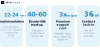
We have seen security budgets double between the initial quote and year-two reality. The per-seat number was honest. Everything else was buried in the contract or scoped as a separate line item after signature.
This is where what vendor lock-in actually costs stops being abstract and starts eating budget that should have gone to the next project.
A realistic pricing breakdown for browser isolation
Most enterprise browser isolation vendors quote a per-seat license, then hit you with implementation fees, bandwidth surcharges, and support tiers you did not see in the demo. Here's what a 500-seat deployment actually costs over five years, broken down by vendor tier.
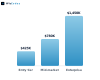
Entry-tier vendors ($85K/year) charge $12-18 per seat monthly, plus a $40K implementation fee and annual support at 18% of license cost. Bandwidth is usually bundled but throttled after a usage cap.
Mid-market vendors ($156K/year) add enterprise SSO, better uptime SLAs, and dedicated support. Implementation jumps to $90K. You pay separately for bandwidth above 500 GB/month per seat.
Enterprise vendors ($290K/year) include white-glove onboarding, custom integrations, and premium support. They charge $35-50 per seat, $200K+ for implementation, and often negotiate minimum commits that lock you in for three years.
Hidden line items pile up fast. Overage fees, add-on security modules, and annual price escalators of 5-8%. One client paid $180K in unplanned costs across year two and three because their contract's bandwidth clause was buried on page 11.
If you are evaluating three vendors and their quotes are within 15% of each other, the real differentiator comes down to contract flexibility and what happens when your seat count changes mid-term.
The same build-vs-buy math applies to security infrastructure. Before you sign a three-year deal, model what happens if your headcount doubles or you need to pause seats during a slow quarter. Most enterprise contracts do not let you scale down.
How to evaluate vendor contracts without overpaying
Most vendor contracts hide their real cost structure until after the sales call. You need a checklist before that conversation starts.
Ask three questions up front. What is included in the base price? What triggers an overage fee? What requires a separate add-on purchase?
Write down the answers. Most vendors will claim everything is flexible until you need something specific.
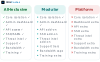
Request a written SLA before signing. Uptime guarantees, incident response time, and bandwidth limits should all be in the contract, not the pitch deck. If a vendor will not put it in writing, assume it does not exist.
Budget for three costs separately: the license itself, implementation and onboarding, and the engineering time to wire it into your stack. Often the second two exceed the first.
If you need custom dashboards and management interfaces beyond what the vendor provides, factor that in before committing to a multi-year deal.
When expensive is worth it and when it's just markup
Some vendors charge a premium because they solve genuinely hard problems. Others charge it because they can.
The difference shows up in three places: what you get for the base price, what changes cost, and how the contract binds you in year two.
A legitimate premium buys you architectural flexibility, faster incident response, and contract terms that let you scale down without penalty. Markup buys you a sales cycle, a customer success manager who schedules check-ins, and change orders for work that should have been included.
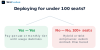
The expensive-but-worth-it vendor shows you the implementation plan before you sign. They explain exactly what triggers an additional fee. They write exit terms that let you leave with your data and configs intact.
The expensive-because-markup vendor sells you a vision, then invoices you for the engineering work to make it real.
Frequently asked questions
Should I negotiate a lower per-seat price or focus on usage caps?
Focus on usage caps first. A low per-seat price means nothing if you get billed extra for bandwidth, sessions, or data transfer - and most vendors bury those overages in the fine print.
What happens if we outgrow our contracted user count mid-year?
Most vendors charge a higher rate for overages than the contracted per-seat price. Ask upfront what the overage rate is and whether you can pre-purchase user blocks at your contracted rate.
Are there hidden costs beyond the per-seat license fee?
Yes. Integration fees, onboarding charges, premium support tiers, and bandwidth overages are common. Ask for a total cost of ownership estimate that includes all of these before signing.
How long does it take to deploy browser isolation across our organization?
Deployment timelines range from two weeks for cloud solutions to three months for on-premise infrastructure. Factor in pilot testing, user training, and policy configuration when planning your rollout.
Can we pilot the system with a small team before committing to a full contract?
Most vendors offer pilot programs. Negotiate a short pilot period with your actual users, your actual sites, and real workloads - not a sanitized demo environment.
What should we ask about contract lock-in and exit terms?
Ask whether the contract auto-renews, what the cancellation notice period is, and whether you can export your configuration and policies. Some vendors make leaving expensive on purpose.